

29 January 2026
|
Duncan Davidson
Supporting the statutory Devolution Framework through digital clarity
This is the third article in our four-part series examining how LocalGov Drupal supports local authorities through reorganisation and devolution. In our first article, we explored how LocalGov Drupal provides a standardised platform that can help achieve the efficiency goals outlined in the English Devolution White Paper. Our second instalment examined how the platform facilitates digital integration for newly formed authorities.
The English Devolution White Paper introduces a statutory Devolution Framework that will fundamentally change how powers are distributed across government tiers in England. This framework moves away from the current ‘devolution by deal’ approach towards "devolution by default," creating consistent powers for different authority types.
The white paper explicitly states that a key goal is to ensure the "public has a clear understanding of who is responsible for what in their area." This clarity is essential not just for accountability but also for the practical functioning of local democracy. Residents need to know who to contact about different issues and who to hold to account at the ballot box.
The powers puzzle: communicating responsibilities to residents
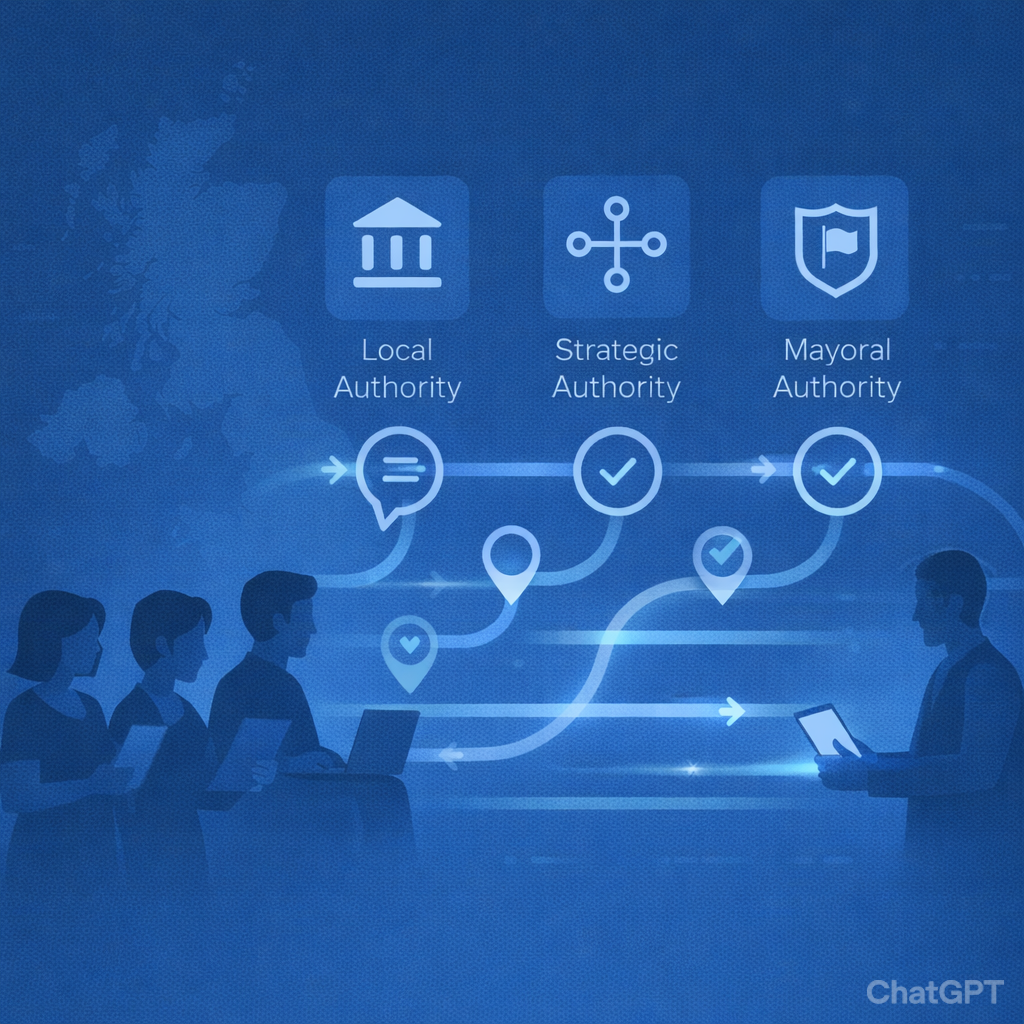
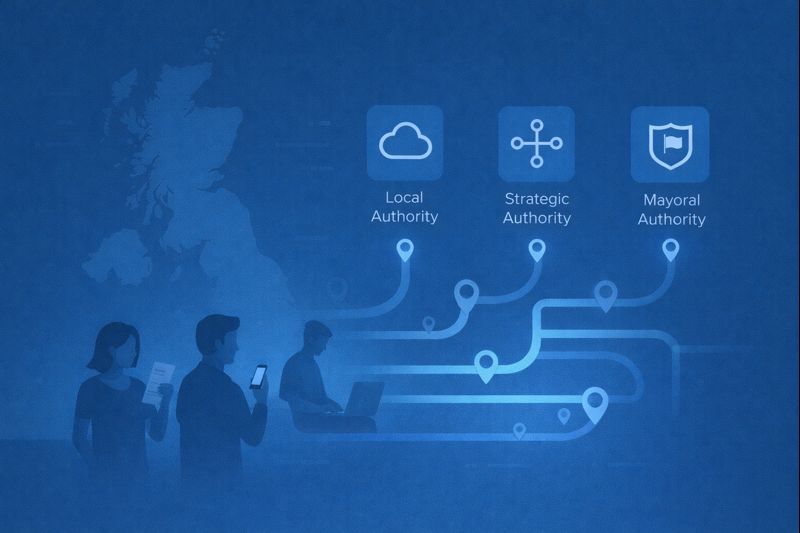
The Devolution Framework introduces several authority tiers with different powers:
- Foundation Strategic Authorities: Non-mayoral Combined Authorities, Combined County Authorities, and certain designated Local Authorities
- Mayoral Strategic Authorities: Mayoral Combined Authorities and Mayoral Combined County Authorities
- Established Mayoral Strategic Authorities: Experienced mayoral authorities that qualify for an Integrated Settlement
Each tier has different responsibilities across areas such as transport, skills, housing, economic development, and public safety. These responsibilities will be enshrined in legislation, creating a complex yet consistent landscape for citizens to navigate.
For local government digital teams, the challenge is clear: how do we communicate these different responsibilities clearly to residents who simply want to access services or report issues?
How LocalGov Drupal helps to clarify the messaging
LocalGov Drupal is uniquely positioned to help authorities navigate this challenge through a digital infrastructure designed specifically for local government. The platform offers several key advantages:
1. Clear information architecture for government responsibilities
LocalGov Drupal's service-focused architecture provides a natural framework for explaining which authority is responsible for different services:
- Service landing pages clearly establish ownership of specific functions
- Topic-based navigation helps users find the right authority for their needs
- Structured content types ensure consistent presentation of responsibility information
This architecture can be adapted to different authority types within the Devolution Framework, whether a single Local Authority, a Foundation Strategic Authority, or a Mayoral Strategic Authority.
2. Consistent navigation patterns across authorities
As more councils adopt LocalGov Drupal, citizens benefit from consistent navigation patterns when moving between different authority websites. This consistency helps users understand the different roles of local, strategic, and national government.
The platform's standardised approach to presenting services means that even as responsibilities shift under the Devolution Framework, the user experience remains familiar.
3. Integration capabilities for cross-authority services
Many services will involve collaboration between different levels of government. LocalGov Drupal supports this through:
- Service connection points that clearly show when a service transitions between authorities
- API capabilities for data sharing between different authority websites
- Flexible content reuse enables accurate information to be maintained in one place and displayed across multiple sites
4. Adaptability as responsibilities evolve
The Devolution Framework won’t remain static – the white paper explicitly states it is "a floor to our ambition, not a ceiling." As devolution deepens and more powers are transferred to local and strategic authorities, websites must adapt.
LocalGov Drupal's modular structure allows for rapid updates as responsibilities change, ensuring citizens always have access to accurate information about which authority provides which service.
Best practices for communicating responsibilities
Based on these examples and the capabilities of LocalGov Drupal, we recommend the following best practices for authorities implementing the statutory Devolution Framework:
1. Provide clear service ownership information
For every service presented on your website, clearly state which authority is responsible. LocalGov Drupal's service pages include dedicated fields for this information, ensuring consistency.
2. Develop a responsibilities guide
Create a dedicated section explaining the responsibilities of different authorities in your area. This should use plain language and avoid jargon, focusing on what residents need to know to access services.
3. Use consistent terminology
Adopt consistent terms for different authority types and their powers, aligned with the language in the Devolution Framework. This consistency helps residents understand the governance landscape.
4. Create smooth handovers between authorities
When a service crosses authority boundaries, provide clear signposting to guide users through the process. LocalGov Drupal's link functionality can help create these pathways between different authority websites.
5. Focus on outcomes, not structures
Frame explanations around how different authorities work together to deliver outcomes for citizens, rather than focusing on administrative arrangements. LocalGov Drupal's topic pages can group related services from different authorities around common themes.
To illustrate these best practices in action, the following case study shows how clear digital communication supported residents during a major local government transition.
Case study: Managing transitional responsibilities during Cumbria's reorganisation
When Cumberland Council and Westmorland & Furness Council were created on the 1st of April 2023, they faced an immediate challenge: how to communicate service responsibilities to residents while digital assets from six former district councils were still being migrated.
Rohallion worked with both new unitary authorities to implement a solution that maintains clarity during the multi-year transition period. Our approach demonstrates how LocalGov Drupal's flexibility can support the complex reality of local government reorganisation, where responsibilities shift incrementally rather than overnight.
The challenge: timescales and signposting
Residents needed to access services immediately, but the new councils couldn't migrate all digital content and functionality from the previous district councils at once. Services like waste collection, planning applications, and council tax remained temporarily hosted on legacy district council websites, even though the new unitary authorities were now responsible for delivering them.
Without clear signposting, residents would struggle to find the information they needed. More critically, as services migrated over time or responsibilities changed, the councils needed a way to update this guidance quickly and accurately.
The solution: intelligent postcode-based routing
The solution centres on a postcode lookup function that automatically directs residents to the correct information for their specific area. The waste collection service page on Westmorland & Furness Council's website provides a clear example.
Residents first see a simple choice: if they know which former district area they live in (Barrow, Eden, or South Lakeland for Westmorland & Furness), they can select it directly. For those unsure of their area, a postcode lookup instantly directs them to the correct bin collection information, whether it's hosted on the new council website or temporarily on a legacy district council site.
This approach offers several benefits:
- Accuracy: The postcode lookup eliminates guesswork, ensuring residents always reach the correct information for their specific location.
- Maintainability: As services migrate from district council websites to the new unitary authority platforms, the routing can be updated centrally without changing the user-facing page. When a particular area's waste collection information moves to the new site, a simple backend update redirects future lookups accordingly.
- Adaptability: The system can accommodate the reality that different services migrate at different rates. Waste collection might move quickly, while planning history or local land charges take longer to consolidate.
- Consistency: Residents experience a consistent starting point on the new council website, even when the destination information is temporarily hosted elsewhere.
A postcode-based routing approach was also used in developing a waste collection tool for Dumfries and Galloway Council. This project tackled a similar challenge: helping residents find the correct information for their specific location when service delivery varied by area.
The waste collection tool reduced customer enquiries by enabling residents to enter their postcode and receive personalised information about:
- Their bin collection schedule
- What can be recycled
- How to request additional services
When Cumbria's councils were created, we addressed a more complex scenario: routing residents not just to different service schedules, but to entirely different digital platforms during the transition period. The principle is the same – use location intelligence to hide complexity and present residents with exactly the information relevant to them.
What can other authorities learn?
Authorities implementing the statutory Devolution Framework can apply similar principles:
1. Prioritise the resident journey over administrative structures: Residents shouldn't need to understand governance arrangements to access services.
2. Use intelligent routing early: Implement location-based direction from the start of any transition, rather than expecting residents to navigate complex interim arrangements.
3. Design for change: Build systems that assume responsibilities will evolve, making updates straightforward as the Devolution Framework expands.
4. Start where residents start: Create single entry points for service categories, then handle the complexity of routing behind the scenes.
The Cumbria experience shows that clear digital communication during complex structural change is achievable.
As Strategic Authorities are established across England, similar approaches will help maintain service continuity and public understanding throughout the transition.
How to implement a digital responsibilities framework
To put these best practices into action using LocalGov Drupal, authorities should implement the following steps:
Step 1: Audit current responsibilities
Begin by mapping all services to the relevant tier of government under the Devolution Framework. Identify areas where responsibilities are shared or where handovers between authorities occur.
Step 2: Develop a consistent language model
Create a glossary of terms aligned with the Devolution Framework to ensure consistency in how responsibilities are described across your digital estate.
Step 3: Implement a clear content structure
Use LocalGov Drupal's service architecture to clearly communicate responsibility information:
- Service pages should state the responsible authority
- Topic pages should explain how different authorities contribute
- Guide pages can provide detailed explanations of governance arrangements
Step 4: Create visual clarity
Develop a visual system that helps users quickly identify which authority is responsible for different services. This could include colour coding, icons, or other visual cues integrated into the LocalGov Drupal theme.
Step 5: Collaborate with neighbouring authorities
Work with other authorities in your region to ensure consistent communication about shared or adjacent responsibilities. The LocalGov Drupal community provides a natural forum for this collaboration.
Conclusion
The statutory Devolution Framework represents a significant step forward in clarifying the powers of different authority types across England. However, this clarity at the legislative level must be translated into clear communication for citizens.
LocalGov Drupal provides the digital infrastructure to achieve this clarity, with a service-oriented architecture designed specifically for local government. By adopting the platform and implementing the best practices outlined above, authorities can ensure that residents understand "who is responsible for what" in their area.
As the government works to complete the map of Strategic Authorities across England, this digital clarity will be essential to maintaining public trust and ensuring services remain accessible during the transition. LocalGov Drupal offers a proven, cost-effective solution to this communication challenge.
What's next?
In our next article, we'll explore "Supporting strategic planning in local authorities through digital engagement and accountability," examining how LocalGov Drupal can help local authorities deliver complex strategic planning processes while maintaining democratic accountability and community engagement.
More from this series
This article is part of our series on local government reorganisation and the role digital plays in getting it right. Catch up on the rest below.

Learn how we can make LGR easier for you
Simply fill in this form with your key details and we'll be in touch.